"62 Years Old. Retired Healthcare Worker. I Finally Stopped Living in Fear of Accidents — After 11 Years of Trying Everything"
Even with 32 years of nursing experience, I trusted my doctor when he said 'it's just aging.' He was wrong. And I proved it.

By Linda M., RN (Retired) | Updated: February 3, 2025
If you're a woman over 55 dealing with unexpected leaks — when you laugh, sneeze, cough, or stand up too quickly — please take 3 minutes to read this.
For 11 long years, I suffered in silence. I wasted over $4,000 on pads and treatments that didn't work, all because I believed it was a 'muscle problem.'
This isn't an ad. I'm not selling anything.
I'm Linda. I'm 62 years old. I spent over 30 years working in healthcare before I retired. Now I'm a 62-year-old grandmother taking care of my 5-year-old grandson Mason.
I'm sharing this because — after 32 years in healthcare — I had no idea this information existed.
I didn't learn the real cause of my own problem until after I retired.
Consider yourself lucky you found this page.
I've had so many women ask me about this that I finally decided to write everything down in one place.
So please — read this now, while you still can.
It started when I was 51.
Menopause had begun, and there were tiny leaks here and there. When I laughed too hard. When I sneezed.
After 32 years as a healthcare worker, I told myself — "It's hormonal changes. This is normal."
So I bought my first pack of panty liners. No big deal, right?
But by 55, it wasn't "just liners" anymore.
It was pads. Multiple times a day. I carried extras in my purse like they were my lifeline.
As a healthcare worker, I knew anatomy. I knew how pelvic floor muscles worked. So I did Kegels religiously. Proper form. Every day.
It didn't help.
And then came the moment I'll never forget.
My grandson Mason — he was 4 at the time — came running up to me at Thanksgiving. Arms wide open. That big smile on his face.
And I froze.
What if I leak? What if he smells something? What if my daughter notices?

The look on his face. The confusion. The hurt.
I went to the bathroom and cried for 20 minutes.
For 32 years, I took care of patients. I comforted the sick, held their hands, stayed up all night with them.
And yet I had become someone who couldn't even hold her own grandson on her lap.
It got worse.
My husband Richard and I hadn't been intimate in almost 3 years. In 38 years of marriage, that had never happened.
It wasn't that I didn't want to — I was terrified of what might happen.
The smell. The wetness. The humiliation.
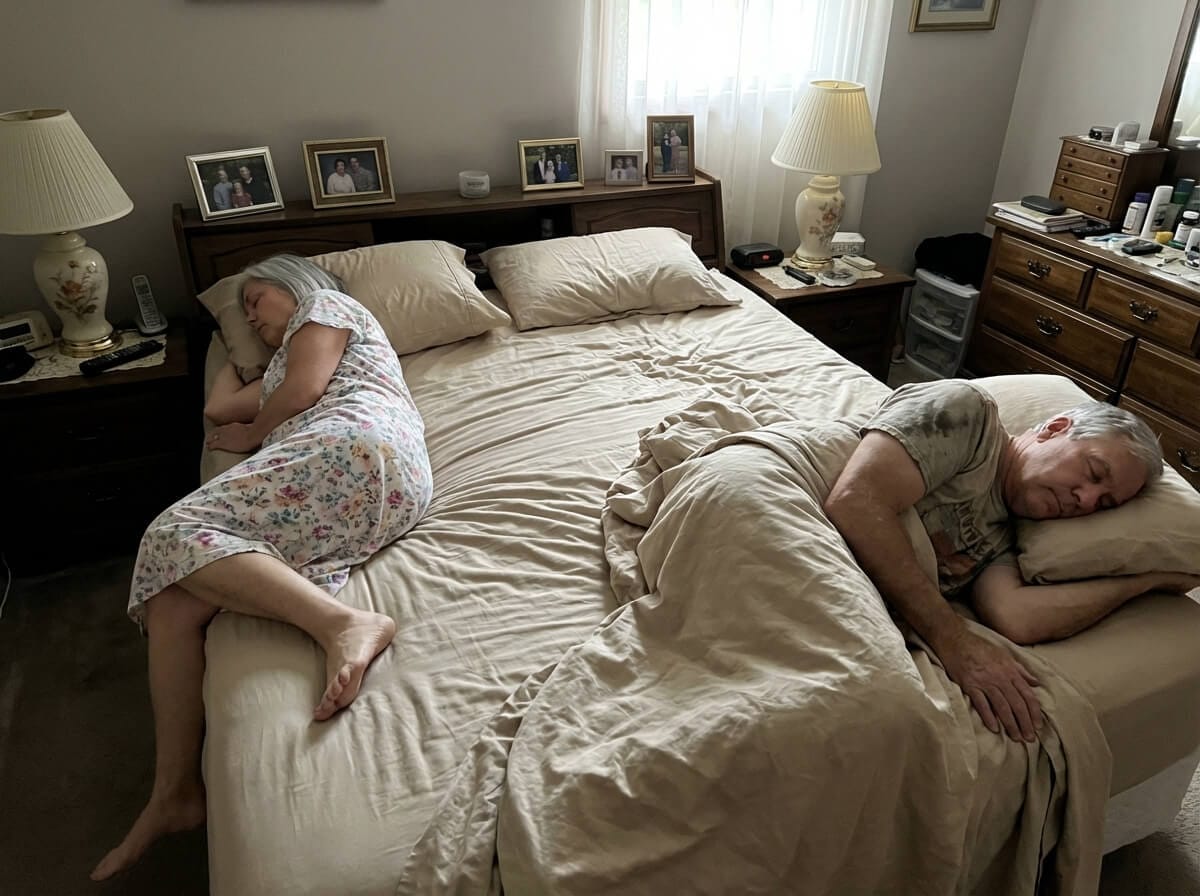
Our 38-year marriage was becoming two people sleeping on opposite sides of the bed.
My former colleague Janet — she's 68 now. Same problem. Last year, she ended up needing full-time help.
She said she couldn't manage it herself anymore.
Her last words to me: "Linda, I thought it was just aging. I should've done something sooner."
I refused to become that. But honestly? I was already on that path.
Of course, I talked to a specialist I trusted. A friend in the field — someone I'd known for over 30 years — was straight with me.
Having worked in healthcare, I recognized the name immediately. It was supposed to help calm the bladder down. I was hopeful. I thought a pill would be the answer.
But the first week was awful.
It wasn't just physical discomfort — I just didn't feel like myself. I felt dried out and groggy all day.
I knew medications often came with trade-offs, but experiencing it myself was different. There were moments I felt so hazy that I struggled to focus on my grandson.
And the accidents? Still there. Maybe slightly less frequent — but still there.
When I went back, he recommended a more invasive procedure. Direct injections.
It wasn't a one-time thing, either. I would have to repeat it multiple times a year.
The cost? Even with insurance, it was hundreds of dollars. Every single time.
But what scared me most were the risks. I read that some women lose the ability to go on their own and end up needing medical equipment to help them.
That was a line I wasn't willing to cross.
I had tried so many approaches over the years, but nothing seemed to address what I now believe was the real issue.
I asked my nursing colleagues. I scoured the internet.
I threw myself into "natural" solutions.
I did Kegels even harder. Downloaded an app, set alarms, three sets a day.
I went to a pelvic floor physical therapist. An 8-week program. $1,200.
I drank horsetail tea. Lavender tea. Cut out coffee and wine completely.
I bought a $280 "pelvic floor trainer" device from Amazon.
For about 6 weeks, it seemed to be working.
I started to feel hopeful again.
My daughter asked if we could host Mason's 5th birthday party at our house.
I said yes. I finally had the confidence.

The day of the party, kids were running around, laughing, making noise.
Mason grabbed my hand and said:
The trampoline.
It'll be fine, I thought. Nothing's happened in 6 weeks.
One jump. Two jumps. Three jumps.
And then I felt it.
Warm. Spreading. Unstoppable.
In front of the kids. In front of my daughter. In front of my in-laws.
Mason's voice echoed across the whole yard.
I walked inside without a word. Locked myself in the bathroom and looked in the mirror.
62 years old. 32 years in healthcare. Cared for thousands of patients.
And I had just wet myself at my grandson's birthday party.
That night, I told Richard:
I couldn't sleep that night.
At 2am, I was scrolling through my phone.
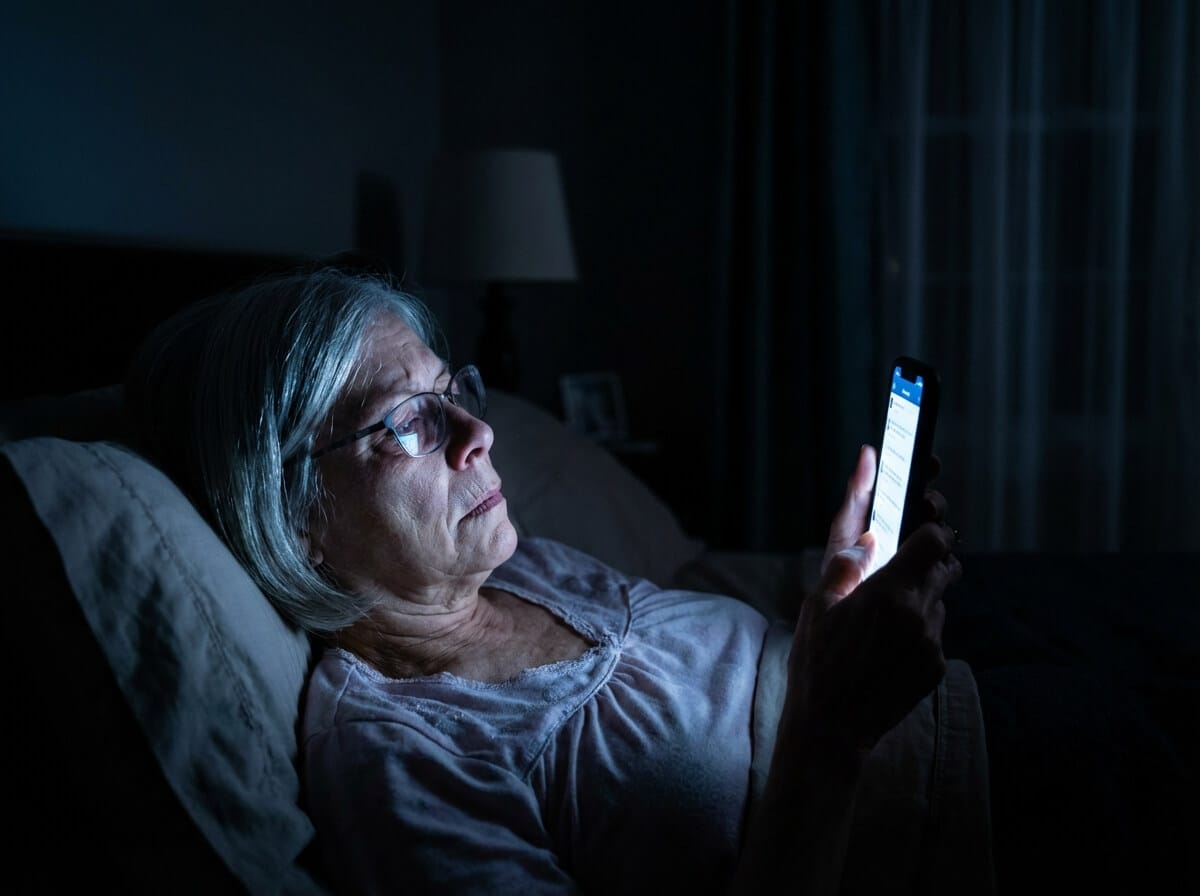
And I stumbled onto a video.
A women's health researcher was explaining something I had never heard in 32 years of healthcare.
Wait. What?
Over 30 years in healthcare. Working alongside specialists.
I had never heard this explained this way.
I sat up in bed. Hit replay.
She explained that just like your gut has a bacterial ecosystem, your urinary tract has its own unique balance.
And when that balance is disrupted, your body can't function the way it should.
My research instincts kicked in. I spent hours reading studies and articles.
By morning, I had dozens of tabs open.

And I finally started to understand.
Why exercises alone didn't seem to help. Why the approaches I'd tried weren't addressing the real issue.
For 11 years, I had been focusing on the wrong thing.
Here's what I learned — and what I never learned in 32 years of healthcare:
For many women, bladder challenges aren't just about muscle strength.
They're often connected to internal balance.
You've heard about "good bacteria" and "bad bacteria" in gut health, right? Probiotics, lactobacillus?
Research suggests your urinary tract has a similar ecosystem.
When this balance is disrupted, three things can happen:
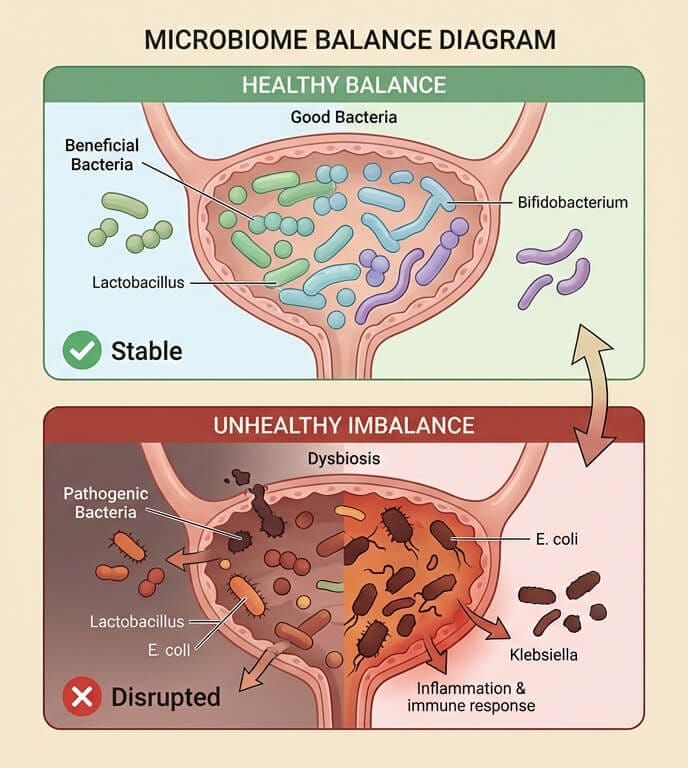
Over time, various factors can affect the beneficial bacteria in your urinary tract.
Research published in the Journal of Women's Health suggests that this internal balance may shift with age and certain lifestyle factors.[1]
When those protective bacteria decline, your body loses part of its natural support system.
When the good bacteria decline, other bacteria may take their place.
Research in the International Urogynecology Journal indicates that bacterial imbalance is common in women experiencing bladder challenges.[2]
These bacteria may cause irritation and trigger sudden, strong urges.
Your bladder and brain communicate constantly. When everything works properly, your bladder sends accurate signals about when you need to go.
But when internal balance is off, this communication can get confused.
Research published in the European Urology Journal suggests that microbiome balance may affect how your bladder signals your brain.[3]
This can cause urgency — even when you don't really need to go.
THE KEY INSIGHT
Kegels don't fix bacteria.
Medication doesn't restore the microbiome.
Procedures don't rebuild the bladder-brain connection.
You have to address all three — at the same time.
This was something I never learned in 32 years in healthcare.
Want to skip ahead and see what finally worked?
Once I understood the real issue, I approached it systematically — like someone with a healthcare background would.
First: Regular Probiotics
I bought every "women's probiotic" I could find. Gut health blends. Various formulas.
With my background, I analyzed the ingredients.
The problem — most probiotics target the gut. NOT the urinary tract.
The strains that actually reach the bladder? Almost none of them had those.
Cost: $89/month. Result: No noticeable difference.
Second: Individual Strains
I found the specific strains mentioned in the research:
I lasted 4 weeks. My whole day revolved around taking pills.
Third: Analyzing Online "Bladder Support" Products
I analyzed the ingredient labels of the top 15 products.
The result?
Most had 1-2 of the right ingredients — but at amounts far below clinical study levels.
The marketing looked great, but the doses couldn't produce real results.
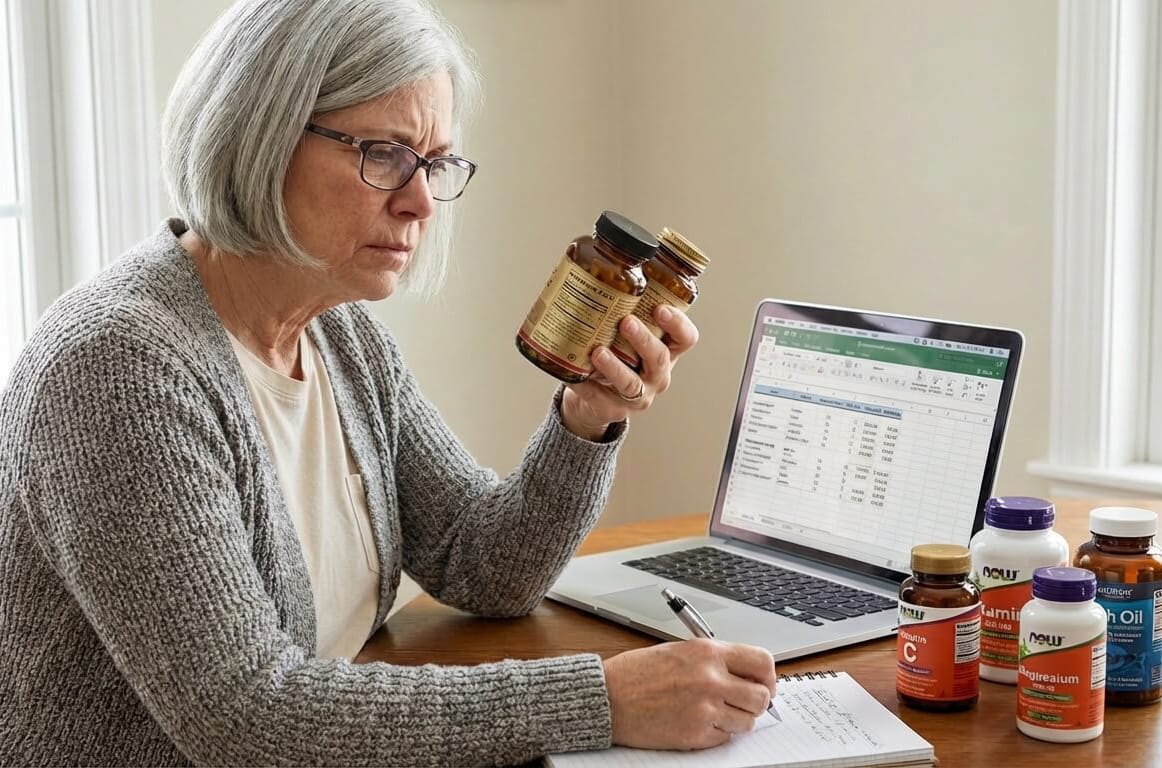
Here were my criteria:
5 specific Lactobacillus strains (urinary-targeted)
Clinical study doses (not marketing minimums)
Berberine (for healthy signaling support)
Cranberry + Bearberry extract (traditional urinary support)
Once-daily dosing (not 11 pills)
That combination didn't exist on the market. At least, that's what I thought.
Then I watched the full presentation from that health researcher.
She introduced a formula designed to address all three factors — internal balance, bacterial support, and healthy signaling — together.
With my background, I was skeptical. I'd seen plenty of claims over the years.
But I looked at the ingredient label carefully. I researched the individual components myself.
Everything matched what I had been searching for.
The specific Lactobacillus strains. Berberine. Cranberry and Bearberry.
And there was a 60-day money-back guarantee if it didn't help.
So I decided to try it. What did I have to lose?
The first thing I noticed? I slept better.
For the first time in years, I wasn't waking up as often feeling urgent.
That morning, I told Richard: "I actually slept last night."
His eyes went wide.
I went to church on Sunday. For the first time in years, I didn't check where the bathroom was before sitting down.
I just... sat with my friends and listened to the sermon.
Like I used to.
I did something I hadn't done in years.
I put on my light beige linen pants — the ones that had been hanging in my closet, waiting for "someday."
I wore them to the mall. Shopped for 3 hours.
Beige. Linen. No backup "just in case."

Mason came over for the weekend.
He ran up to me with a book in his hands. "Grammy, read to me?"
And I said: "Yes."
He climbed onto my lap. We read three books. He fell asleep in my arms.
No fear. No anxiety. No accidents.
I looked at my daughter and she had tears in her eyes.
"Mom, it's been a year."
Richard and I went on a trip for our 38th anniversary.
I'll spare you the details. But let me just say:
We're not sleeping on opposite sides of the bed anymore.
I've shared this with colleagues I worked with for 32 years.





Research supports what we experienced.
Research published in the International Urogynecology Journal suggests that specific Lactobacillus strains may help support healthy bladder function.[4]
Studies in the Journal of Ethnopharmacology indicate that berberine may support healthy muscle function and signaling.[5]
This isn't magic. It's science — science I didn't learn in over 30 years of healthcare.
Femicore
The formula that finally addressed the real issue
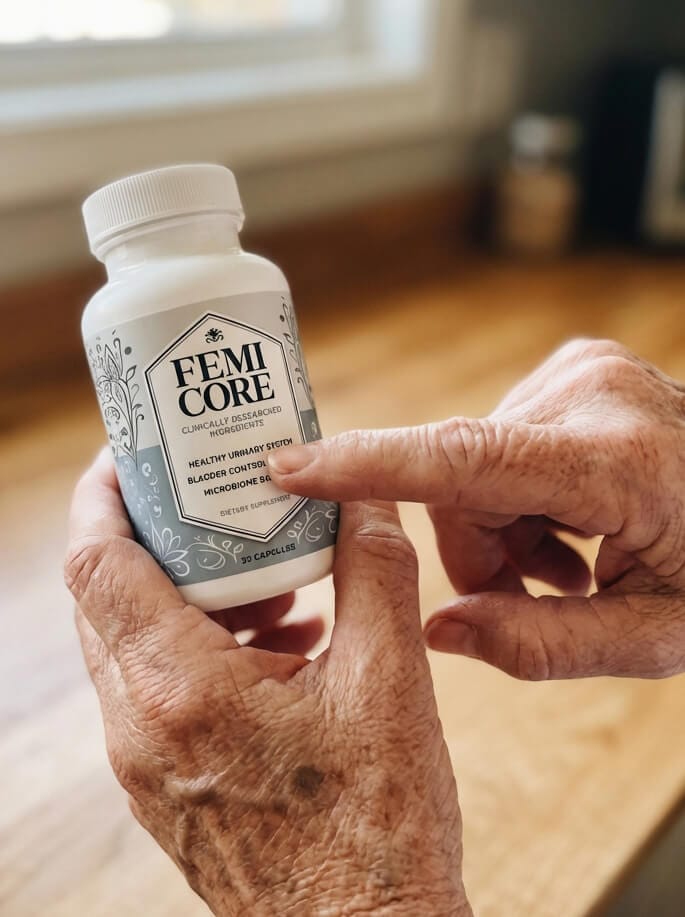
Specific Lactobacillus strains for urinary microbiome balance
Berberine for healthy muscle function and signaling
Cranberry and Bearberry extracts for urinary wellness
One capsule. Once a day.
Here's what I spent trying to address this over the years:
Femicore costs less than what I was spending on monthly "protection" alone.
And it actually addresses what I now believe was the real issue.
Plus, they have a 60-day money-back guarantee.
If it doesn't help, you get your money back. No questions asked. That's what gave me the confidence to try it.
I wasn't planning to share this publicly.
But I've had so many women ask me what finally made a difference.
And honestly? I've seen some of you mention products you're considering — and I can tell from the ingredient lists they might not address the real issue. Different strains.
Lower amounts.
I can't reply to everyone individually.
So I'm leaving the link here for anyone who wants to learn more.
If you're tired of:
Saying "no" to moments that matter
Planning your whole life around bathroom locations
Spending money every month on things that don't address the real issue
Waking up multiple times every night
Feeling like your relationship is drifting apart
Wondering if this is just how life is going to be from now on
You don't have to keep living that way.
I spent 11 years thinking this was just my life now.
11 years of saying no to Mason.
11 years of distance from my husband.
11 years of worry and planning.
I was wrong.
60-Day Money-Back Guarantee • No Questions Asked
I hope this helps you — or someone you love — finally find relief.
The way Margaret did. The way Betty did. The way Susan did. The way I did.
You deserve to laugh without worry.
To hug your grandkids without fear.
To sleep through the night.
To feel close to your husband again.
You deserve to feel like yourself again.

— Linda M., RN (Retired), 62
Columbus, Ohio
Grandmother. Finally free.
Already decided?
I understand. Sometimes you just want to skip the video and get straight to the solution that worked for me.
If you’re ready to try Femicore yourself and see the same 7-second difference I did, you don't have to watch the presentation.
You can click below to go directly to the secure order page and check availability.
References:
[1] Pearce, M.M. et al. (2014). "The Female Urinary Microbiome." Journal of Women's Health.
[2] Thomas-White, K. et al. (2018). "Urinary Microbiome and Bladder Health." International Urogynecology Journal.
[3] Fouts, D.E. et al. (2020). "Bladder-Brain Communication." European Urology Journal.
[4] Stapleton, A.E. et al. (2011). "Lactobacillus and Urinary Health." International Urogynecology Journal.
[5] Zhang, Y. et al. (2010). "Berberine and Muscle Function." Journal of Ethnopharmacology.
Copyright © 2025 All Rights Reserved.
This site is not a part of the Facebook website or Facebook Inc.
Additionally, this site is NOT endorsed by Facebook in any way.
FACEBOOK is a trademark of FACEBOOK, Inc.
Create Your Free Account